Saturday, 30 June 2012

Lord Ganesha with Mac

,
Lord Ganesha with Mac Notebook..wow awesome

Read more

Biggest Ganesh Statue in the world...

,
Pink ganesha statue at Siamganesh park, Thailand.
Read more

Friday, 29 June 2012

Google Drive app : Hands on on

,


It's an exciting time when two worlds collide, especially for iOS users that have an affection for Google services. The head honchos in Mountain View took to the stage at Moscone West today and announced two programs were going to be made available in the App Store by the end of day: Chrome and Drive. The latter pushed out first, so we decided to give the free app a closer look. Head below for some screenshots and our impressions of the service.
Read more

Google Chrome mobile browser for IOS:Hands on

,


Google just launched Chrome for iOS and it’s now available in the App Store. Don’t get too excited,
Read more

Thursday, 28 June 2012

Google Chrome is coming to the iPhone and iPad. .

,


Just a day after Google released the final version of Google Chrome for Android, the company is bringing its popular web browser to iOS.
Read more

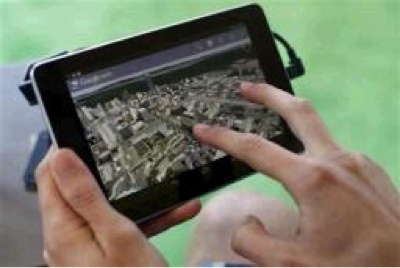
Google goes up against Amazon, Apple with Nexus tablet

,

Google Inc will sell its first tablet from mid-July for $199, hoping to replicate its smartphone success in a hotly contested market now dominated by Amazon.com Inc's Kindle Fire and Apple Inc's iPad.
Read more

ACi India unveils low price Rs 4,999 Icon 1100 laptop

,


The UK-based computer brand ACi unveiled a fully-functional high-resolution screen laptop - Aci Icon 1100 - at Rs 4,999 in the Indian market.
Read more

Wednesday, 27 June 2012

How Depressive surf the web

,


IN what way do you spend your time online? Do you check your e-mail compulsively? Watch lots of videos? Switch frequently among multiple Internet applications from games to file downloads to chat rooms?

We believe that your pattern of Internet use says something about you. Specifically, our research suggests it can offer clues to your mental well-being.
In a study to be published in a forthcoming issue of IEEE Technology and Society Magazine, we and our colleagues found that students who showed signs of depression tended to use the Internet differently from those who showed no symptoms of depression.
In February of last year, we recruited 216 undergraduate volunteers at Missouri University of Science and Technology. First, we had the participants fill out a version of a questionnaire called theCenter for Epidemiologic Studies Depression Scale, which is widely used for measuring depression levels in the general population. The survey revealed that 30 percent of the participants met the criteria for depressive symptoms. (This was in line with national estimates that 10 to 40 percent of college students at some point experience such symptoms.)
Next, we had the university’s information technology department provide us with campus Internet usage data for our participants for February. This didn’t mean snooping on what the students were looking at or whom they were e-mailing; it merely meant monitoringhow they were using the Internet information about traffic flow that the university customarily collects for troubleshooting network connections and such.Finally, we conducted a statistical analysis of the depression scores and the Internet usage data.
There were two major findings. First, we identified several features of Internet usage that correlated with depression. In other words, we found a trend: in general, the more a participant’s score on the survey indicated depression, the more his or her Internet usage included these (rather technical-sounding) features for instance, “p2p packets,” which indicate high levels of sharing files (like movies and music).
Our second major discovery was that there were patterns of Internet usage that were statistically high among participants with depressive symptoms compared with those without symptoms. That is, we found indicators: styles of Internet behavior that were signs of depressive people. For example, participants with depressive symptoms tended to engage in very high e-mail usage. This perhaps was to be expected: research by the psychologists Janet Morahan-Martin and Phyllis Schumacher has shown that frequent checking of e-mail may relate to high levels of anxiety, which itself correlates with depressive symptoms.
Another example: the Internet usage of depressive people tended to exhibit high “flow duration entropy” — which often occurs when there is frequent switching among Internet applications like e-mail, chat rooms and games. This may indicate difficulty concentrating. This finding, too, is consistent with the psychological literature: according to the National Institute of Mental Health, difficulty concentrating is also a sign of depressive symptoms among students.
OTHER characteristic features of “depressive” Internet behavior included increased amounts of video watching, gaming and chatting.
Earlier studies have looked into the relationship between Internet usage and depression, but ours is thought to be the first to use actual Internet data, collected anonymously and unobtrusively, rather than student-completed surveys about Internet usage, which are less reliable.
What are the practical applications of this research? We hope to use our findings to develop a software application that could be installed on home computers and mobile devices. It would monitor your Internet usage and alert you when your usage patterns might signal symptoms of depression. This would not replace the function of mental health professionals, but it could be a cost-effective way to prompt people to seek medical help early. It might also be a tool for parents to monitor the mood-related Internet usage patterns of their children.
Such software could also be used at universities, perhaps installed on campus networks to notify counselors of students whose Internet usage patterns are indicative of depressive behavior. (This proposal, of course, raises privacy concerns that would have to be addressed.)

Mental health groups have recommended screening in multiple settings as a critical component of preventing mental health problems in young people. We believe that monitoring Internet usage could be part of the solution.

->>>Sriram Chellappan is an assistant professor of computer science at Missouri University of Science and Technology. Raghavendra Kotikalapudi is a software development engineer.
A version of this op-ed appeared in print on June 17, 2012, on page SR12 of the New York edition with the headline: How Depressives Surf the Web.
Read more

Google unveils tablet to take on Apple, Amazon

,
Google took the wraps off its first tablet computer on Wednesday, looking to replicate its smartphone success in the tablet market despite tough competition from Apple Inc, Microsoft and Amazon.

The "Nexus 7" tablet, built by and co-branded with Taiwan's Asus, will begin selling for as low as $199 on the Google Play website and apps store from around mid-July.

At 7 inches and $199, the device takes aim initially at the Kindle model, which analysts consider a window into Amazon.com's trove of online content.

Google can similarly use the Nexus 7 - unveiled at its annual developer conference in San Francisco - to connect to its own online offerings, which include video service YouTube and Google Play. It will go after more cost-conscious users who might shun the loftier price tag of $499 and above on Apple's iPad.

"That range of services will be the secret to stitching together this rag-tag fleet of Android gadgets into a platform that can compete with Apple for minutes of users' attention rather than premium device dollars," said Forrester analyst James McQuivey.

Shares in Google gained 0.8 percent to $569.37 in afternoon trade.

The Nexus will feature the new 4.1 "Jelly Bean" version of Google's software, as well as a front-facing camera, a 1280x800 resolution screen, and an Nvidia Tegra 3 processor.

Google's Android software is the No. 1 operating system for smartphones, but has struggled to compete with Apple's iPad in the market for tablets.

Executives showcased the new 4.1 "Jelly Bean" version of Android operating system at the event in San Francisco. The new software delivers faster performance, according to the company, and new features such as "voice search."

The Internet search leader said that 1 million devices using its Android mobile software are being activated every day.

Google briefly sold a specially designed Android smartphone - the Nexus One - directly to consumers in 2010, but closed the online store after four months saying it had not lived up to expectations.
Read more

Monday, 25 June 2012

Google revamps search engine to think like a person..

,


Google announced a major revamp of its web domineering search engine few days ago.. just days after Microsoft’s rival Bing service announced upgrades of its own.


Google’s new search powers are encapsulated in what the company calls a Knowledge Graph, in which the new algorithms attempt to understand exactly what people are looking for and present basic answers on the results page, without users needing to click on any secondary links.
“We’ve always believed that the perfect search engine should understand exactly what you mean and give you back exactly what you want,” blogged Amit Singhal, Google’s senior vice-president of engineering. “And we can now sometimes help answer your next question before you’ve asked it, because the facts we show are informed by what other people have searched for.”
Using what Mr. Singhal called the “collective intelligence of the web,” the Knowledge Graph shows results for Tom Cruise, for example, that manage to answer 37 per cent of the next questions that people usually ask.
“This used to be the stuff of dreams because we didn’t really know how to accomplish it,” Mr. Singhal said. “The dream has always been to understand things like you and I do, so this really feels like a sea change.” The new information will be contained in a special panel next to the traditional search results, Google said, and will be rolled out to users in the United States in the coming days before going international.
Jack Menzel, director of product management at Google, said that the initial version of Knowledge Graph has information on 500 million people, places and things and uses 3.5 billion defining attributes and connections to create categories for them.
Microsoft is investing billions of dollars in Bing in an attempt to close the search gap with Google, which serves some two thirds of all U.S. web searches compared to 15 per cent on Microsoft’s Bing.
Read more

Microsoft to buy Yammer for $1.2 billion

,
Microsoft Corp agreed to buy online social network firm Yammer Inc for $1.2 billion in cash, which will allow the software company to offer a service like Facebook Inc's to corporate customers.
Read more

Touching Story: The evil you do remains with you: The good you do,comes back to you! ..

,


A woman baked chapatti (an Indian food like pizza) for members of her family and an extra one for a hungry passerby. She kept the extra chapatti on the window sill, for whosoever would take it away. Every day, a hunchback came and took away the chapatti. Instead of expressing gratitude, he muttered the following words as he went his way: “The evil you do remains with you: The good you do, comes back to you!” This went on, day after day. Every day, the hunchback came, picked up the chapatti and uttered the words: “The evil you do, remains with you: The good you do, comes back to you!” The woman felt irritated. “Not a word of gratitude,” she said to herself…
Read more
 

Texolo Copyright © 2011 -- Template created by O Pregador -- Powered by Blogger